

Isolation
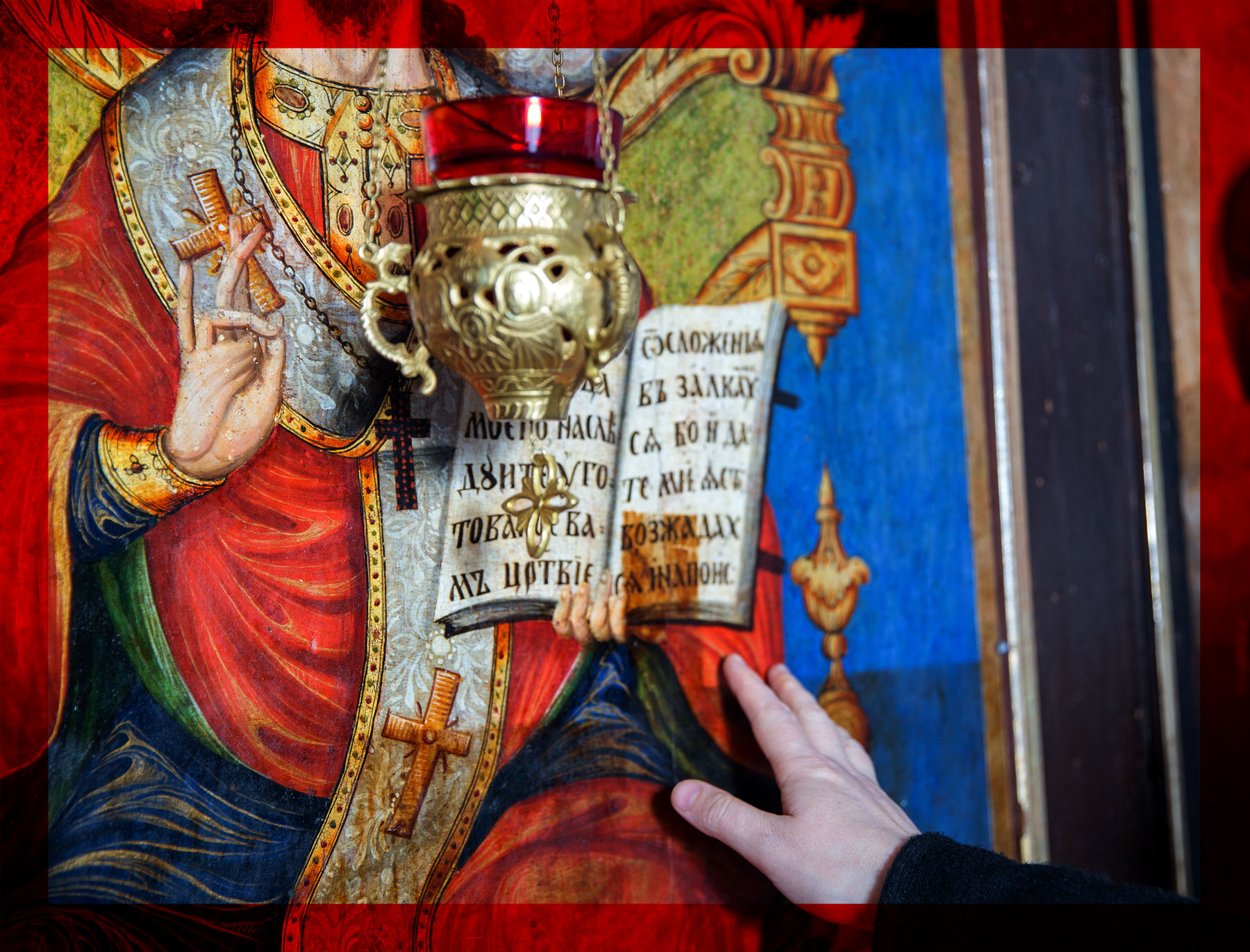
Documentary photography for the French magazine La Vie was an engagement I did five years ago. There are so many different topics on my website, that I was unsure how religious topics and my visit to the monastery of St. Nikola-Koncul in November 2019 – right before the corona would fit into it all. I didn’t want to write it like I usually do – on the go and in a hurry. Sometimes some impressions sit in us for a long time until we are ready to share them with others. Dear reader, please do not mind that my topics are so diverse. There are studio to documentary photos here, from nudes to religion, from fashion to firefighters. Photography takes me on incredible adventures and diverse experiences – it’s not up to me.
About Miss Photography
Sometimes I think that both word and image are limiting. The word frames, gives finality to an experience, no matter how strong our power of expression is. Similarly, photography simplifies and reduces three dimensions to two. Yes, it ignores the third dimension. I don’t know what Miss Photography has against the third dimension. However, sometimes a single word can make a point and leave us without a comment. Photography, when it’s extraordinary, reveals a dimension that can’t even be seen with the eyes, and that’s why I cherish and appreciate it.
About the Monastery
The Monastery of St. Nicholas-Koncul is isolated due to its location. It is close to Raska and Kosovo, and it was either built or renovated by Serbian ruler Stefan Nemanja in 1175. While approaching the monastery, you can notice a small church on the slope, right at the edge of a large meadow that descends the hill until the Ibar River cuts it. Then, it climbs again upward hills. When you are next to the church, the landscape takes your breath away. And when you finally breathe in, tame blooming noble plants that only a woman’s hand can care for so carefully and motherly, steal your attention.
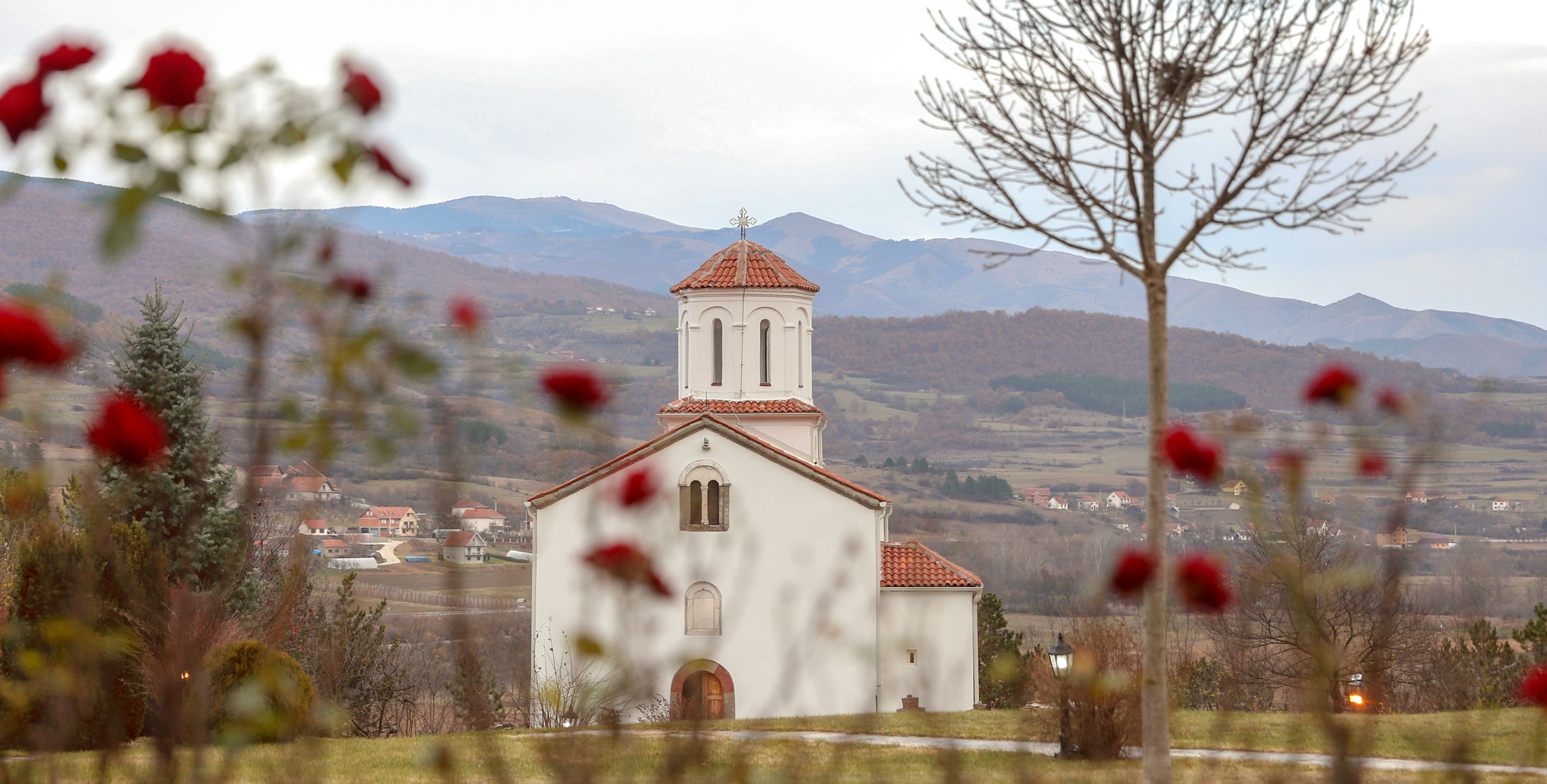
At first glimpse, this small church on the top of the hill does not exude the feelings of admiration and awe as other massive temples, especially Catholic ones in Europe. Imposing Gothic basilicas seem so grandiose. One feels insignificant and small when inside them. In contrast, this small church in a women’s monastery has an intimate, maternal energy in which one feels safe, tucked in, and comforted. After all, faith is not built by stones, but by praying and with love.
Isolation as a Choice
The word “monk” is of Greek origin and means: alone, one who leads a solitary life. Another word for this is the most used word in 2020 – isolation. It has changed our whole day, life, activities, and thoughts. I love the quote by Yusuf Karsh – one of the best portrait photographers of the 20th century – “Character, like photography, develops in the darkness.” I would add – “and in solitude”.
For some, isolation in 2020 did not bring significant changes, because isolation is a choice and a way of life for them. Nuns would say that it is never a choice. The nuns’ family stories are interesting, some of them escaped families, sometimes even with a communist legacy. Despite the resistance from those closest to them, their love for God is so real that there is no choice. One rushes into such love, regardless of the environment, and the expectations of friends, relatives, and neighbors. One surrenders to such love.
About Mother Minodora
Mother Minodora, together with her sisters Anisia and Bosiljka and others, told the journalist various interesting stories. The question crossing my mind was why someone would give up all life’s passions, pleasures, and challenges into which we choose to dive. Why would someone isolate himself and give his life for an idea, an intangible thought, a religion?
The answers were revealed on her serene face. The look in her slightly smiling eyes returned to my pupils like some kind of sublime consciousness that I could not understand. All questions would be silenced and an incredible peace would arise. Only the fluttering of her mantle in the wind would occasionally disturb the serenity as she was retelling stories. Everything swayed – the trees, the canvas, the grass on the endless plain, but her face was still.
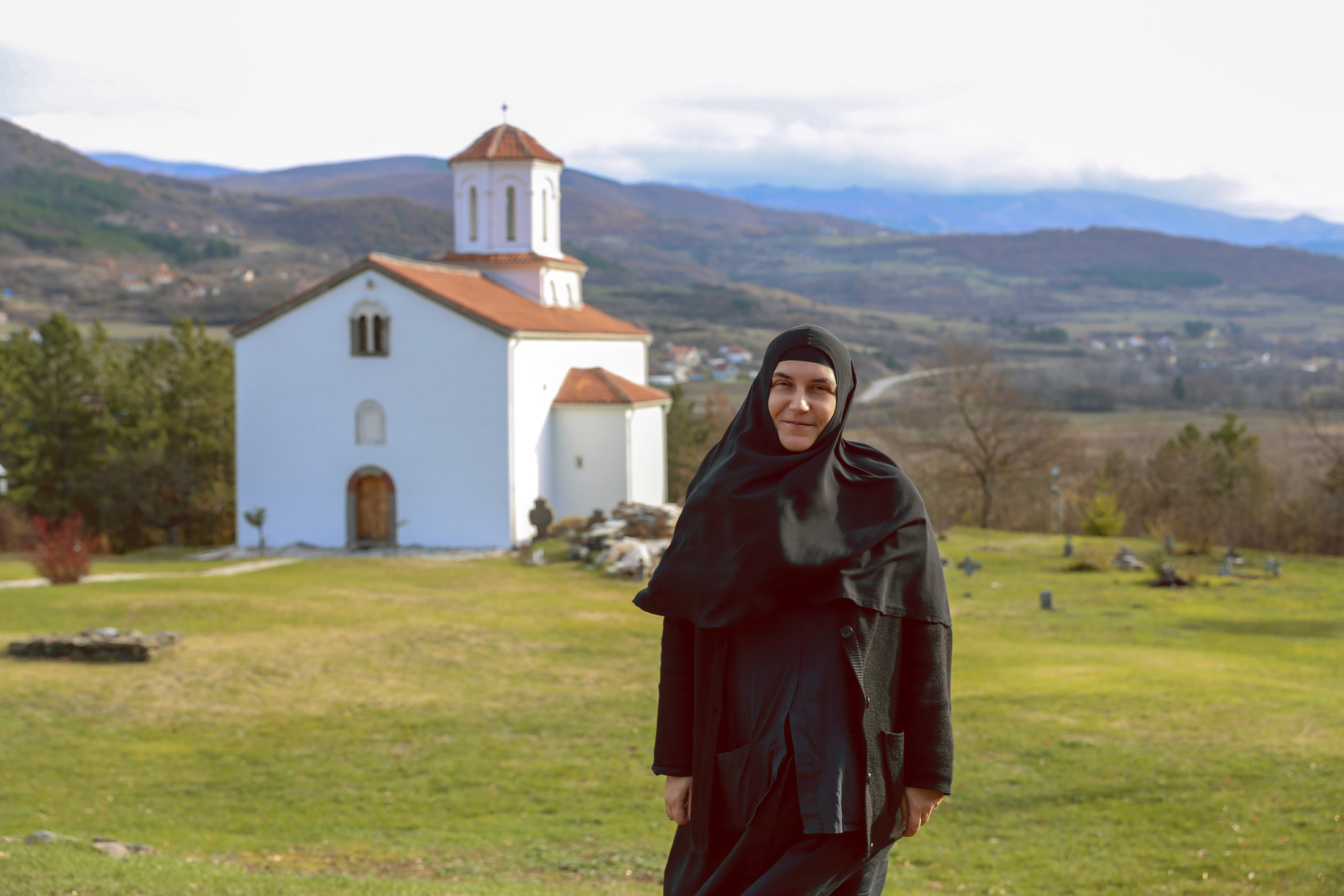
Even today, when I gaze at this photo, I feel the wind under which I tuck my hair tickling my cheeks. I was taking pictures, and She, like a sculpture, steadfast, unwavering, stood with an expression of gentleness and kindness.
Incredibly. Sometimes I look at a photo – it’s static yet, it’s flickering.
About Sister Anisia
Sister Anisia, of Russian origin, paints icons using an ancient technique. She is an artist. I looked for various definitions of art and I may say that her work unites all interpretations of art. Having found freedom in the strict canons of the church, her icons “convey ideas and emotions”, and “stimulate the human mind and senses” – yes, she succeeded in this.


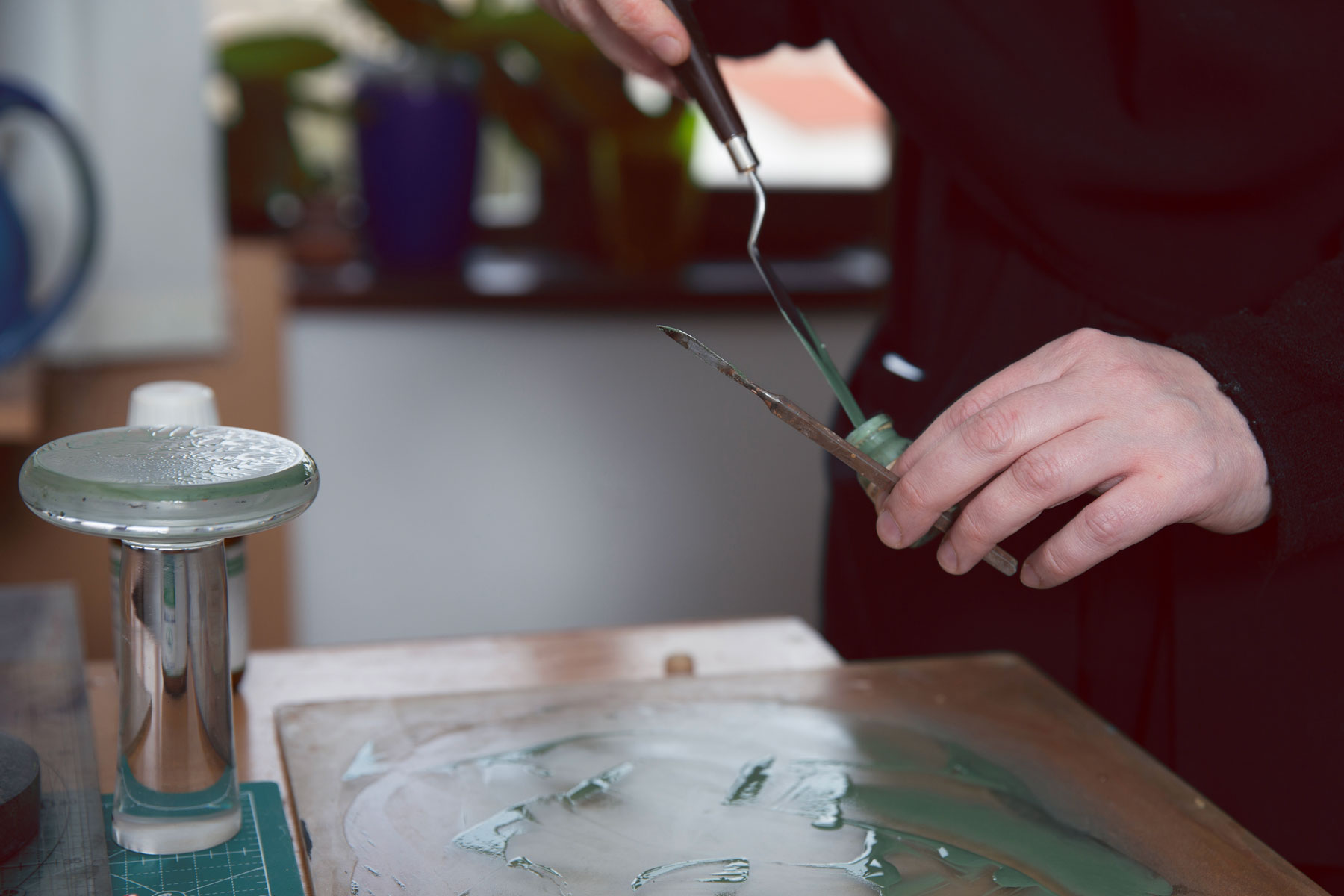
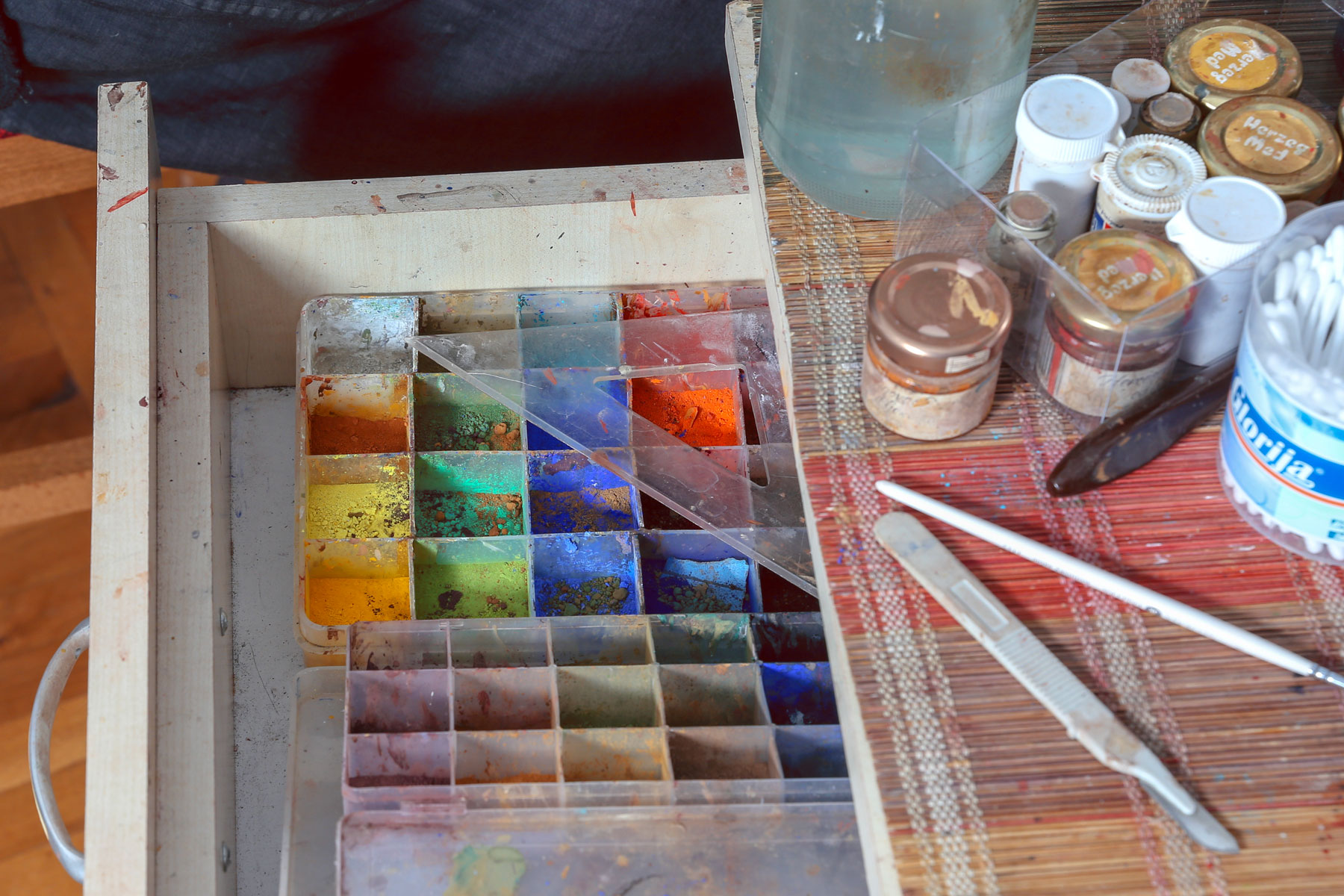
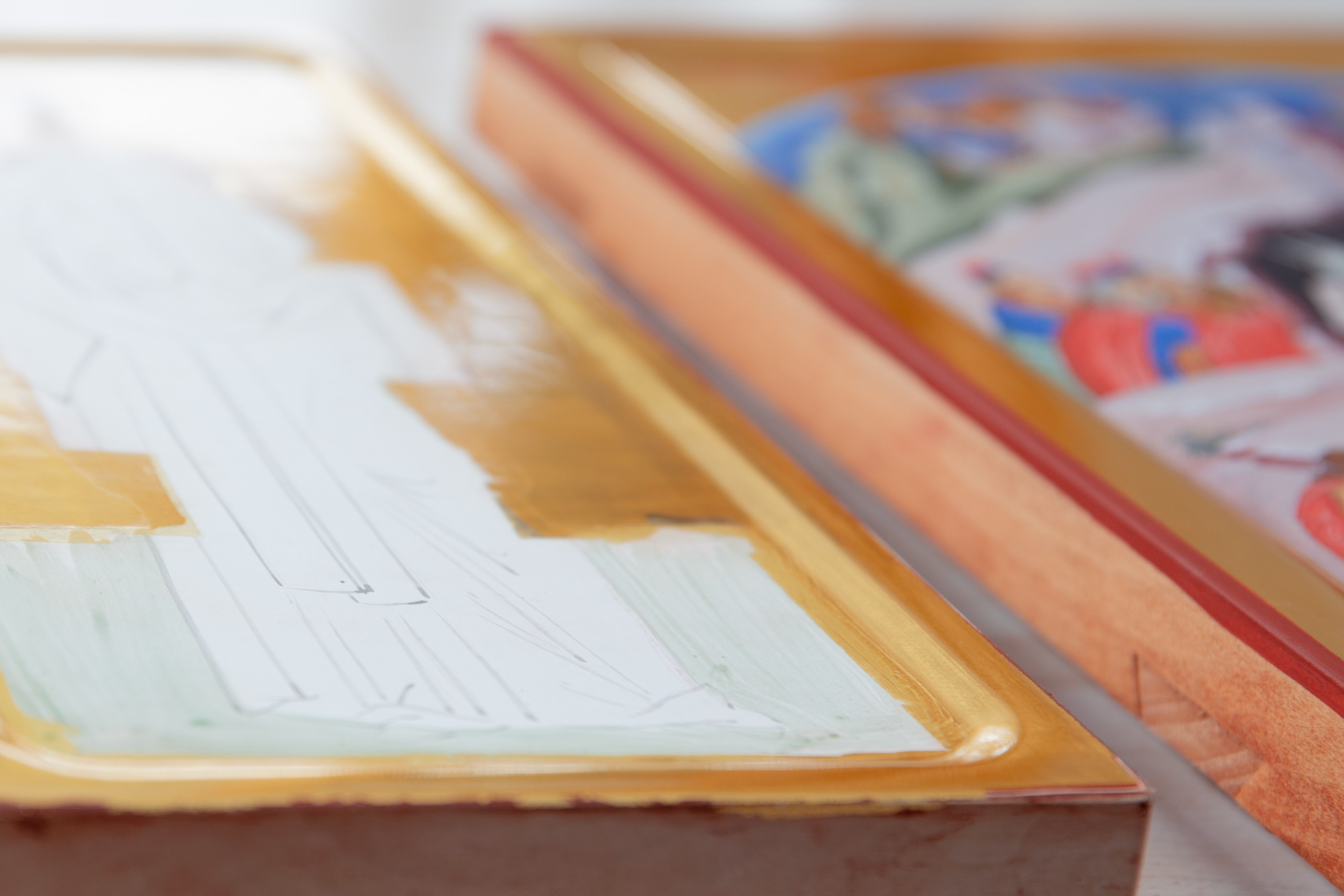
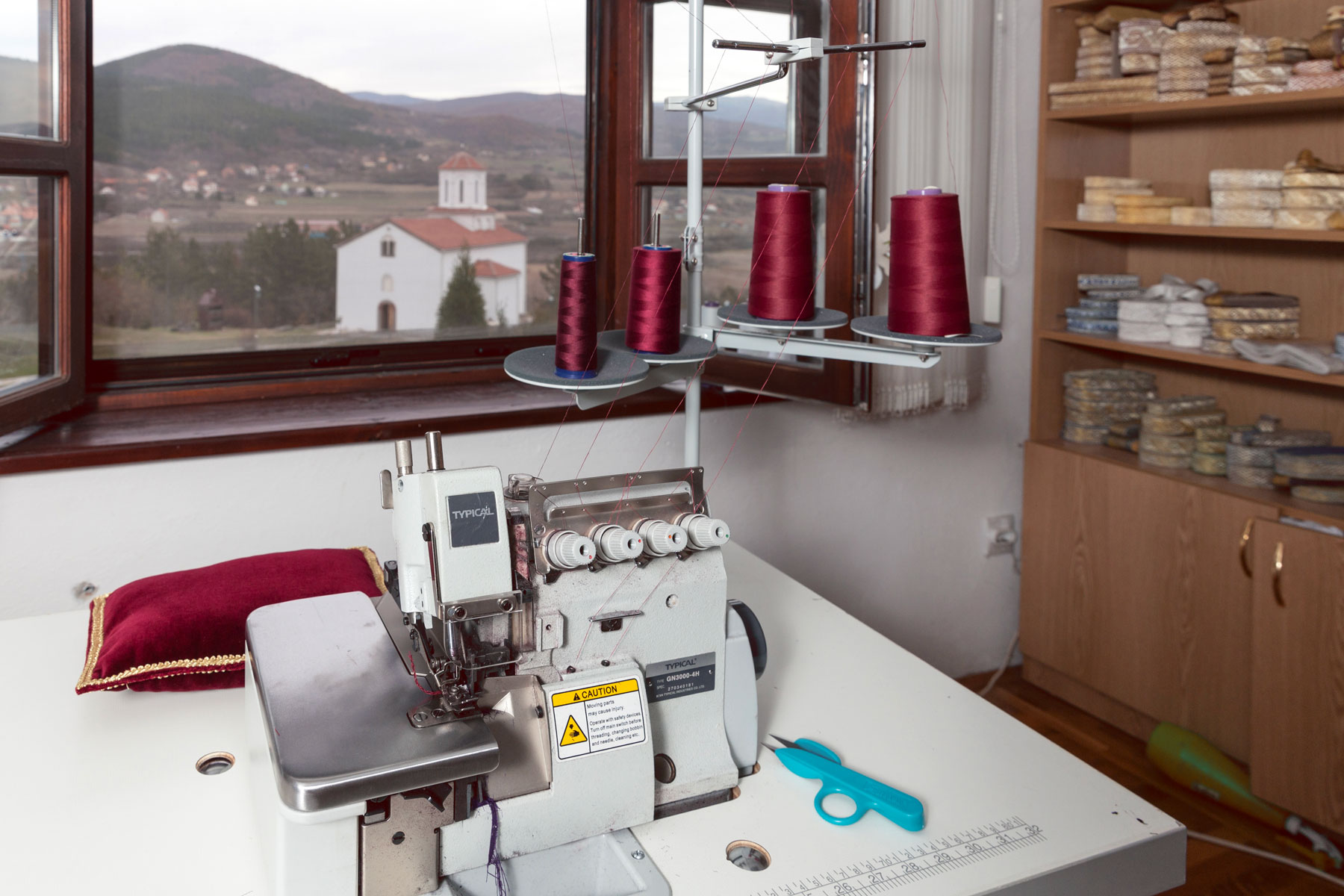

In addition to painting, the nuns in the Koncul monastery are also engaged in church embroidery and sewing priestly vestments.
About Hearthkeeper
I don’t think I would feel well in monastic seclusion. Nevertheless, the nuns of the monastery in Raska work in silence, preserve traditions, old crafts, and customs and they constantly create. They spartanly get up before five in the morning for the first service, read prayers, perform rituals, and do everything that should be done in the monastery. They create things.
As builders of the faith in the monastery in Raska, they raise the ramparts of Orthodoxy with their silent action in isolation. Their achievement is not directly visible, but as soon as you step on the grounds of the monastery, you feel that you are standing in an unusual place. They build persistently, stone by stone, far from recognition, applause, or audience. And their work is flourishing. They read, they are well-informed, express themselves beautifully, and are up to date with everything. Despite their way of life, invisible ramparts protect the hearthkeeper from time and all the phenomena of modern life.
About the Creator
The Creator creates. He needs to create, with or without an observer. However, the value of a work or creator increases only with recognition, applause, or an award. It seems that anyone who creates, whether an artist or an architect, needs a consumer, i.e. audience. The work does not exist until it becomes visible and recognized by the recipient. There is no such thing in the women’s monastery. A woman – a nun does not have a career, she cannot become a patriarch. A woman cannot advance to the highest ranks in Orthodoxy. She can’t do much. As I look at the nun and admire her – she can do much, much more than I can. I believe she can do much more than any man.

